EV Price War 2026: The Winners, Losers and What's Next
Tesla, BYD and legacy automakers are slashing EV prices to survive. Here's who's winning the brutal price war — and which brands won't make it to 2027.
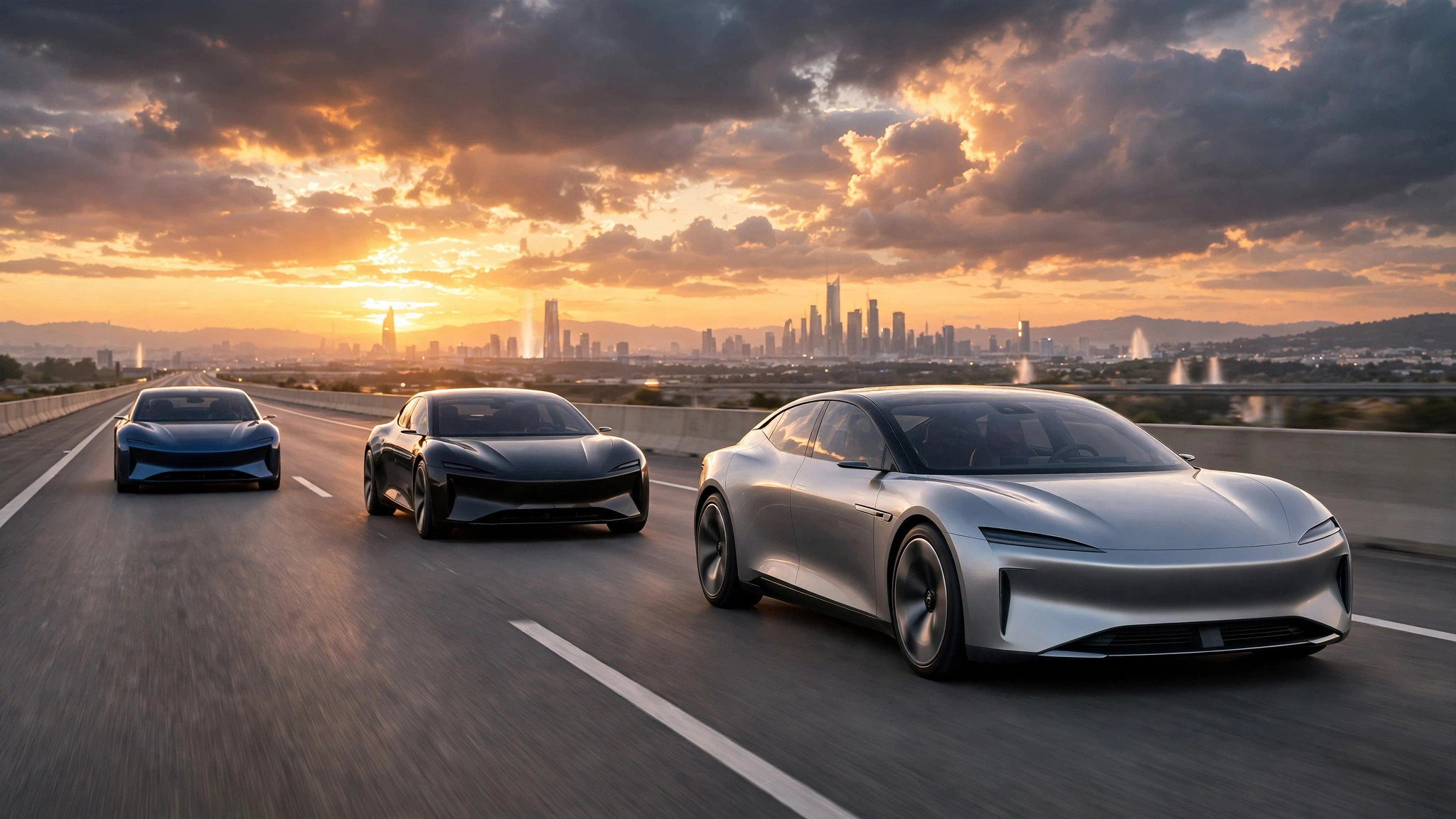
The electric vehicle price war that began as a skirmish has become a full-scale war of attrition. Through 2025 and into 2026, automakers from Detroit to Shenzhen have cut sticker prices again and again, squeezing margins to levels the industry has not seen in decades. Average EV transaction prices have fallen sharply, showrooms are crowded with discounted inventory, and the casualties are mounting.
Price wars follow a brutal logic: the strong get stronger through scale, and the weak bleed out. In the EV price war, scale is everything — battery costs, software amortization, and manufacturing efficiency all reward volume. Here is who is winning, who is losing, and what the coming shakeout means for buyers.
The Winners: Scale, Batteries, and Ruthless Cost Control
BYD and Tesla sit at the top of the winner's column for opposite reasons. BYD's vertical integration — it builds its own batteries, semiconductors, and increasingly its own transport ships — gives it a cost base rivals cannot match. Tesla's manufacturing simplicity and high software margins let it cut prices while staying profitable on a per-unit basis. Both gain share precisely because they can afford the war they started.
Chinese exporters more broadly are the conflict's biggest beneficiaries, using domestic overcapacity to flood export markets with keenly priced models. Western regulators have answered with tariffs, but the underlying price gap remains enormous. As Forbes has covered, the tariff debate now matters as much to EV pricing as battery chemistry does.
Software is the quiet second front. Tesla's high-margin driver-assistance subscriptions and BYD's growing services revenue mean both companies earn money long after the car leaves the lot — a structural advantage traditional automakers, still learning to sell software, have yet to replicate. In a price war, recurring revenue is armor.
The Losers: Everyone Caught in the Middle
The pain is concentrated among legacy automakers and second-tier EV startups. Legacy brands face a cruel dilemma: their electric divisions lose money on nearly every car sold, while the combustion-engine profits funding the transition keep eroding. Startups fare worse still — several once-hyped EV makers have already collapsed or been absorbed at fire-sale valuations, and analysts expect more to follow:
- Legacy automakers — per-vehicle EV losses still run into the thousands of dollars even after aggressive price cuts.
- Underfunded startups — without manufacturing scale, every price cut deepens an already dangerous cash burn.
- Dealers — compressed new-car margins and collapsing used-EV values are straining franchise networks.
- Early adopters — rapid depreciation has punished first movers when they try to trade in.
Battery Costs: The War's Deciding Factor
Beneath the sticker-price drama sits the real battlefield: batteries. Cell prices have fallen dramatically over the past decade, and each new low resets the industry's cost floor. Automakers with locked-in, low-cost cell supply — through ownership or long-term contracts — can cut prices strategically. Everyone else is cutting into bone. Control of the battery supply chain now determines who sets prices, as Reuters has documented in its coverage of the industry's restructuring.
The chemistry race
Lithium-iron-phosphate chemistries keep getting cheaper, sodium-ion is emerging as a budget alternative, and solid-state remains the industry's long-promised breakthrough. The winners of the price war are not waiting for breakthroughs — they are winning with today's chemistry at unprecedented scale. Meanwhile, manufacturing innovations like cell-to-body designs squeeze more range from the same materials, pushing effective costs down another notch every year.
What's Next: Consolidation and the $25,000 EV
The endgame is consolidation. Expect mergers, exits, and a market dominated by a handful of scaled survivors — much like the early auto industry a century ago, when hundreds of marques collapsed into the Big Three. For consumers, the prize is the long-promised affordable electric car: credible $25,000 EVs are arriving in 2026, and they will do more for mass adoption than any subsidy ever has.
Watch two signals to know the shakeout is ending: first, when discounting slows even as volumes keep growing, meaning demand has finally stabilized; second, when surviving brands start raising prices on new models instead of cutting them. Neither has happened yet — which tells you the war still has innings left.
In a price war, the prize doesn't go to the bravest. It goes to whoever builds each car cheapest.
Industry analysts tracked by Bloomberg expect global EV sales to keep climbing even as the field of competitors shrinks. The war has been brutal for the industry — and a gift for anyone buying a car.